
A daily life overexposed to blue light
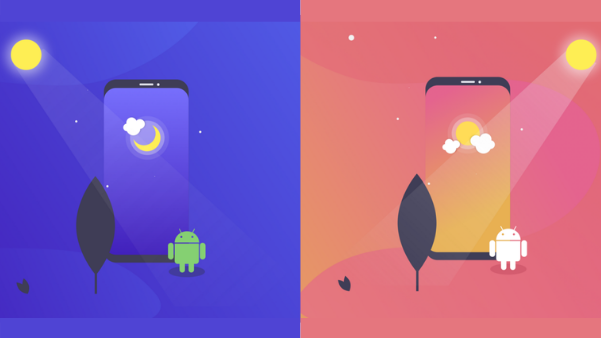
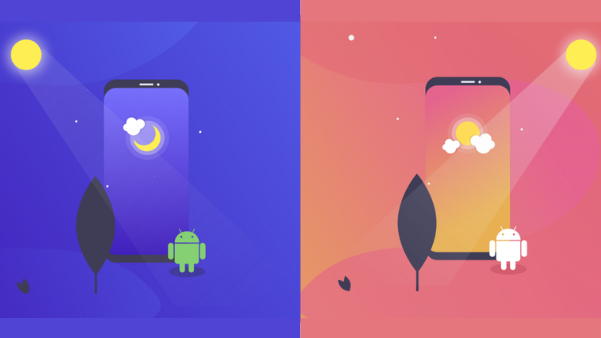
Did you know that blue light can affect you differently depending on the time of day? The effects vary depending on the time of day and the amount of time we are exposed to it. The key is the light source.
Blue light during the day
As we have mentioned in previous posts, blue light can come naturally from the sun's rays. This light, in certain amounts, is healthy for our bodies and is linked to the secretion of endorphins and a healthy lifestyle.
The blue light we receive from the sun is generally much more indirect than the light we receive from our computer or cell phone screens.
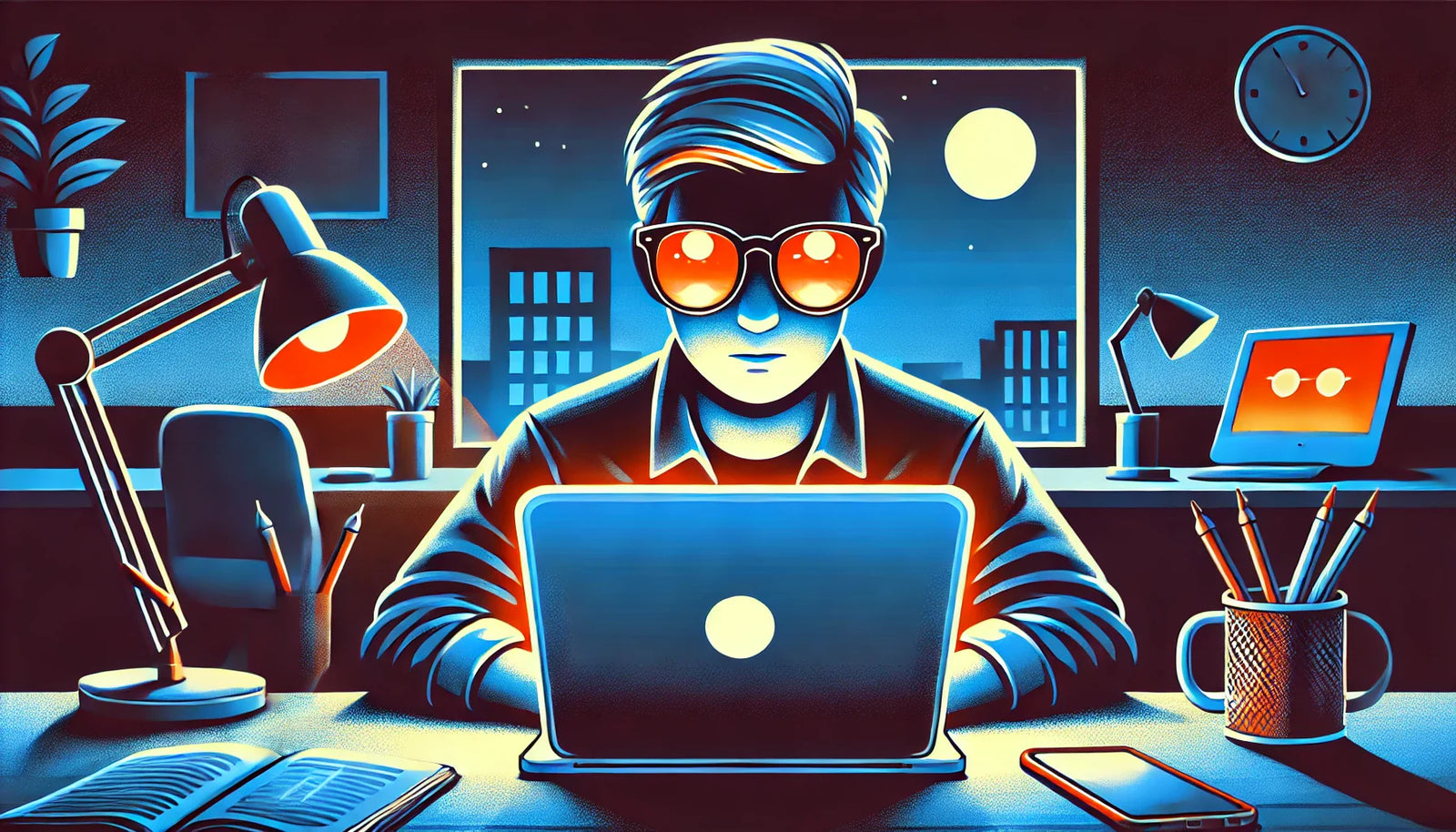
For this reason, in our daily lives, we need to protect our eyes from overexposure to digital screens, which emit large amounts of blue light that can damage retinal cells and cause stinging and irritation. The technology in our blue light glasses helps to achieve optimal blocking depending on the use and time of day.
Discover our blue light glasses for computers and protect yourself while you work or enjoy a movie. Don't worry if you have presbyopia, because we also have prescription blue light glasses.
Blue light at night
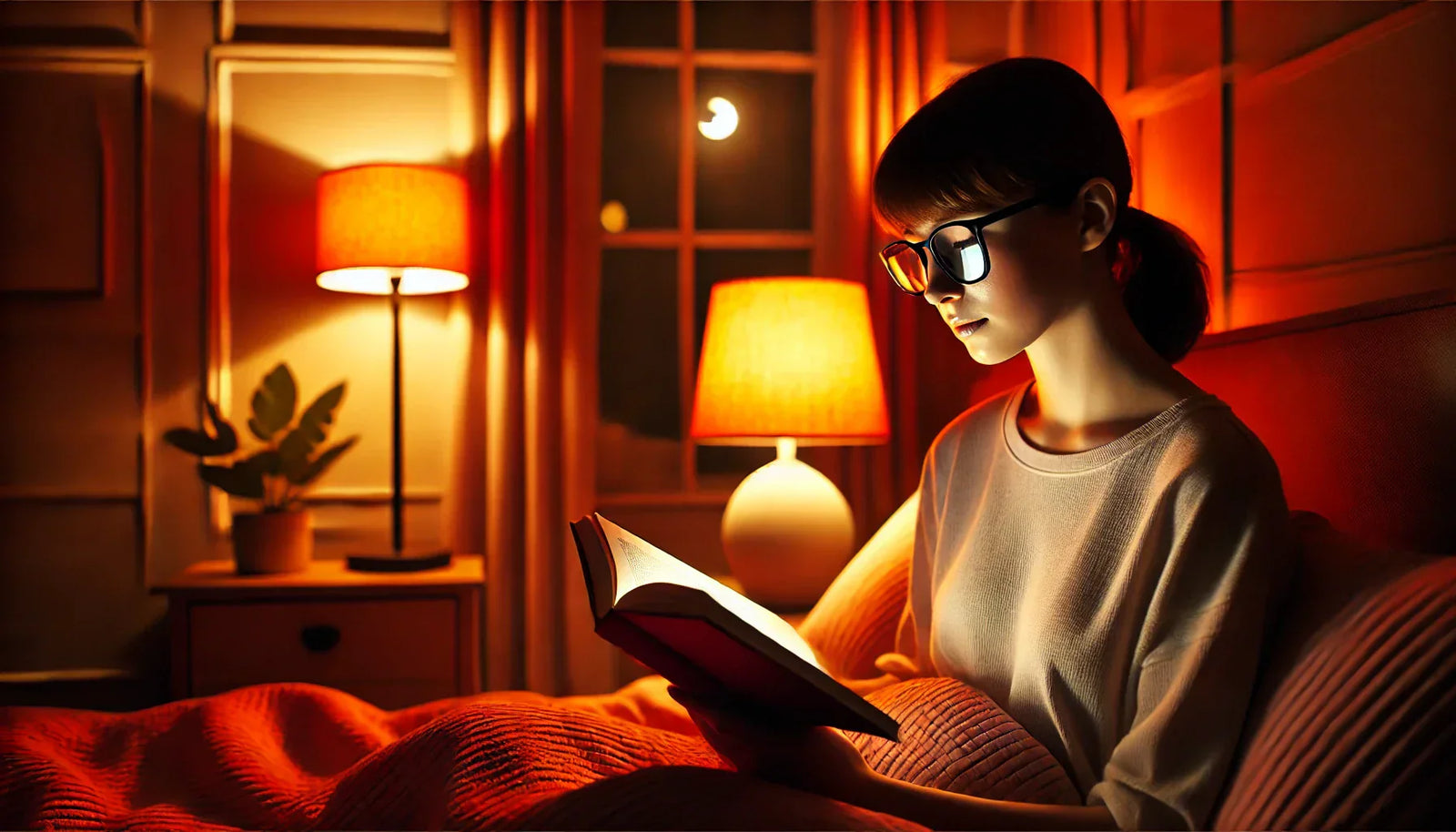
At night, the main source of blue light we receive comes from digital devices rather than natural sources, which disrupts our sleep cycle. This happens because blue light waves interrupt our circadian rhythm, which regulates our body's sleep-wake cycle. Likewise, blue light from computers and digital screens can stop the release of melatonin, a hormone necessary for falling asleep. Some studies are linking sleep deprivation caused by digital screens to long-term problems such as depression and even obesity.
See full article


Blue light at night: the hidden enemy of your sleep and well-being
We live in a world where artificial light surrounds us at all hours. From cell phone and computer screens to LED lighting in our homes, exposure to blue light has become constant. However, when night falls, this light can become a silent enemy to our health.